
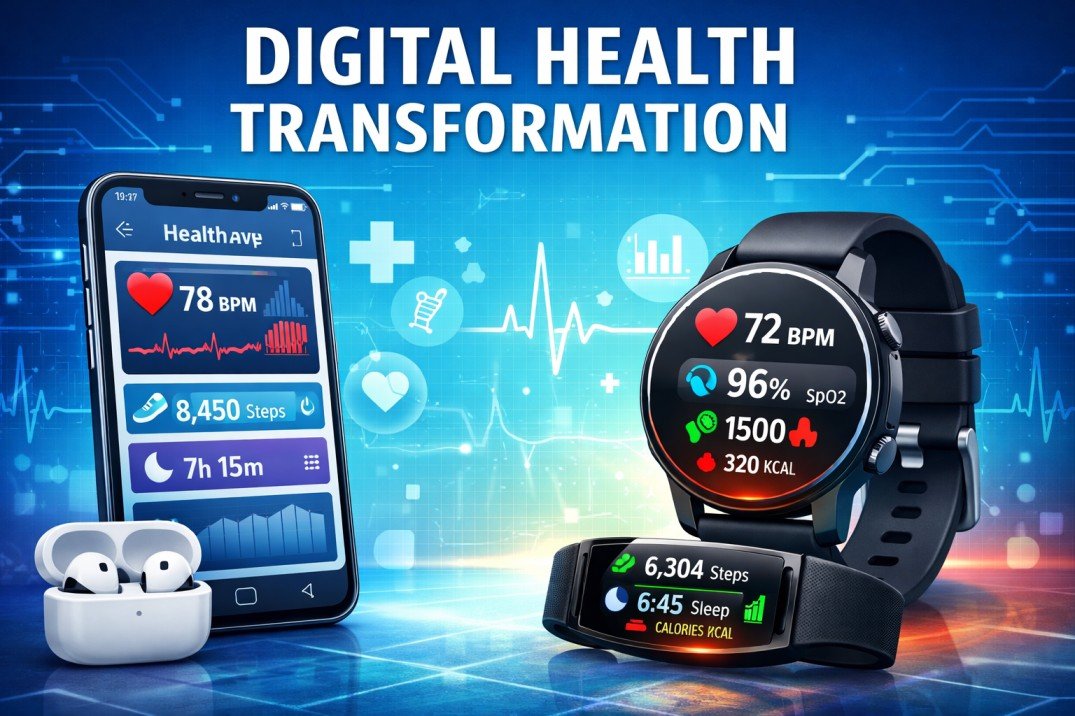
The arrival of technology has revolutionized numerous aspects of the healthcare sector, with tools and portable devices that simplify health management and prevention.
The concept of ” digital health ” is gaining ground in our daily lives; just think of smartphones or devices like smartwatches and fitness trackers, which allow us to constantly monitor some of our key health parameters and share them in real time with doctors and other healthcare professionals. All of this helps us to be more aware of our health status, to prevent certain illnesses more quickly, and to make care more accessible and personalized. But what are the challenges and limitations of these solutions?
“Health” apps
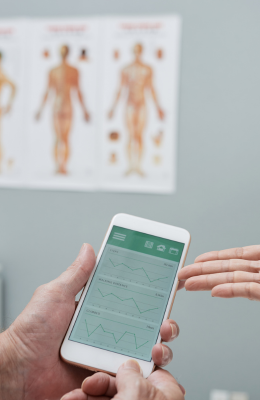
Today, every smartphone comes pre-loaded with apps to improve and monitor personal well-being, offering users the ability to track their physical activity, diet, sleep quality, or count daily steps and monitor heart rate. According to a Statista report, in 2023 there were more than 350,000 health apps available in global app stores, of which around 47% are dedicated to wellness and fitness.
But it’s not just about apps designed for sports and fitness enthusiasts: the real change came thanks to telemedicine, a sector that has revolutionized the relationship between doctors and patients, enabling remote consultations and drastically reducing waiting times. Its exponential growth intensified especially during the Covid-19 pandemic; in fact, in 2020 the number of remote visits increased by approximately 154% compared to the previous year. With a simple video call, patients can obtain diagnoses, prescriptions, and ongoing follow-up, improving access to care, especially in rural areas or for people with mobility difficulties.
Another rapidly developing field is mental health. Some apps offer support for managing stress, depression, and anxiety through mindfulness, meditation, and guided breathing techniques. This area has become an increasing priority in public healthcare, which allocates ever-growing budgets to it each year. Thanks to greater social awareness, more and more people have begun to address the issue, helping to overcome many taboos . This has led to the development of apps and online platforms dedicated to remote psychological consultations.
Portable devices: 24/7 monitoring
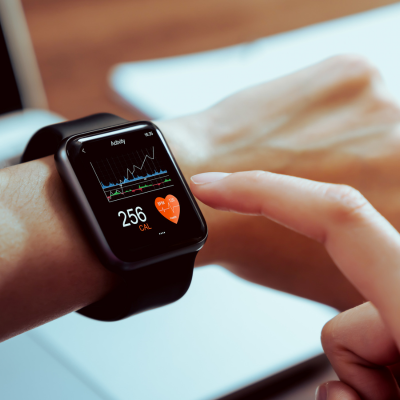
Technological advancements in recent years have enabled the creation of applications and tools capable of providing this service. Although they can provide real-time medical information, such as blood oxygen saturation or perform electrocardiograms (ECGs), it’s important to remember that these devices are not considered medical devices. According to Statista data, in 2022, approximately 533 million people worldwide used wearable devices such as smartwatches and fitness trackers. This number is projected to reach nearly 1.1 billion by 2026.
Alongside devices designed for the prevention of certain diseases, we also find devices for monitoring chronic conditions, such as glucose sensors used by diabetic patients, which allow them to monitor their blood sugar levels without the need for daily finger pricks. This market has experienced a compound annual growth rate (CAGR) of around 12% since 2020, with over 1 million diabetic patients. Similarly, there are wearable devices that monitor blood pressure, enabling people with hypertension to control their readings and intervene promptly in case of abnormalities.
The evolution of these technologies is continuous. Today, many devices include the ability to perform an electrocardiogram (ECG) directly from the wrist, identifying potential heart problems in real time. This type of monitoring, which previously required a doctor’s visit, is now readily available.
The benefits of digital health

The widespread availability of these devices has been a great help to many people, providing various benefits in the continuous and proactive monitoring of health.
One of the main benefits is personalized care: real-time data allows doctors to precisely tailor therapies by continuously monitoring the patient’s clinical condition, 24 hours a day. In this way, medicine is becoming increasingly individualized, with treatments capable of taking into account each patient’s specific circumstances, thus also improving the effectiveness of care.
A study published by the Journal of Medical Internet Research showed that the use of wearable devices and health applications can reduce the risk of hospitalization by up to 20% in patients with chronic diseases, thanks to the constant monitoring of vital parameters.
Furthermore, as already mentioned, the arrival of telemedicine, like the spread of the internet, breaks down geographical barriers. In an ideal future, digital health should help ensure virtually universal healthcare coverage, allowing people living in remote areas to receive medical care without having to physically travel to a doctor’s office or hospital. This benefit also extends to patients with mobility difficulties, the elderly, and those with severe motor disabilities. The World Health Organization (WHO) anticipates that digital health could help reduce this imbalance, with potential savings of over $200 billion globally by 2030, by reducing hospital visits and improving prevention.
Challenges and limitations of digital health

However, why, despite these services already being easily accessible, is telemedicine not perfectly integrated into daily healthcare practices?
In 2024, significant challenges still exist in this area. One of the most debated topics is undoubtedly data privacy and security. Sensitive information is extremely important, and protecting it is crucial. Unfortunately, applications don’t always offer adequate levels of security, which allows for data leaks and potential privacy breaches.
Another major problem is the digital divide. In fact, not everyone has access to advanced smartphones or a stable internet connection, which considerably limits the use of these technologies. Some age groups, particularly the elderly, have limited knowledge of digital devices, which hinders the integration of telemedicine, which, however, could be of great help to them. Despite this, a Pew Research Center report revealed that the use of wearable devices among the elderly (65 and older) increased by 15% between 2018 and 2022. A definitive change could come after the generational shift, when technology is finally accessible to the entire population.
Finally, in addition to the costs of acquiring these devices, which not everyone can afford, there is the issue of data reliability. Although smartwatches and other devices have become increasingly sophisticated, the data they collect is not always as accurate as that obtained through traditional measurements. In some cases, in fact, they can generate false alarms, risking anxiety in patients, or even omit data crucial for detecting potentially serious conditions.
Apps and family doctor: from the waiting room to the smartphone
Health monitoring apps are becoming essential tools in the management of chronic conditions, thanks to their ability to collect and analyze data in real time. These apps can automatically transmit collected information, such as blood pressure, glucose levels, heart rate, and physical activity levels, directly to the primary care physician.
This allows the physician to have a complete and up-to-date view of the patient’s health status, facilitating more precise and personalized monitoring of chronic conditions. This continuous connection between patient and physician can lead to timely interventions, improve adherence to therapies, and reduce the risk of complications, optimizing overall disease management.
An increasingly connected future
Digital health represents a revolution in healthcare, making wellness monitoring and management more accessible, personalized, and proactive. However, as with all innovations, it is important to carefully address the challenges related to privacy and accessibility.
With proper regulation and constant technological progress, apps and wearable devices will have an increasingly significant impact on our well-being and the future of medicine. According to the Global Market Insights report, the global digital health market exceeded $200 billion in 2022 and is expected to reach over $650 billion by 2030, with an annual growth rate of around 15%.
Also read: Wearable Technology in Healthcare and Its Benefits
Doctors and healthcare professionals will continue to play a central role, not only in interpreting the data, but also in supporting patients on this new path of connected care.

I am a final-year MBBS candidate. After years of watching patients misunderstand their own diagnoses, I started writing — because accurate health information should not require a medical degree to understand. I specialise in health, health tech, and public health content, combining clinical training with a passion for making medicine accessible to everyone.”