
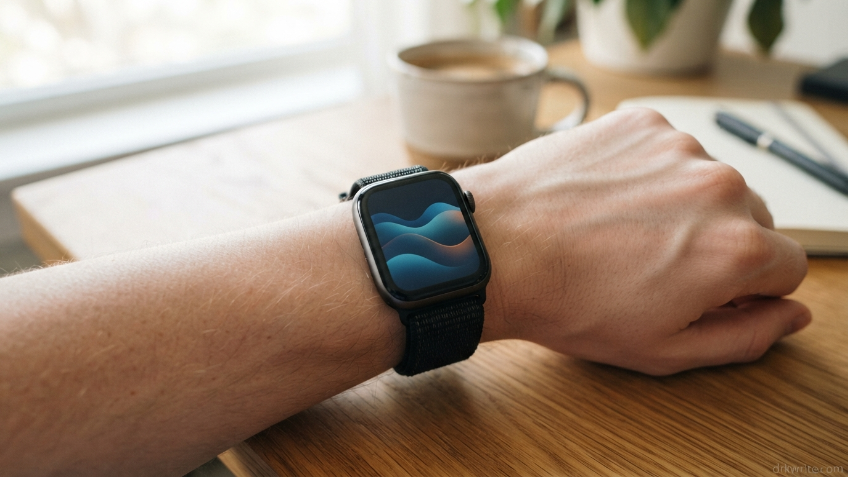
You glance at your smartwatch. Heart rate: normal. Sleep: 7 hours. Step count: 8,000. Everything looks fine on paper yet your body is screaming. Your jaw is tight, your focus is shot, and you have been snapping at colleagues since Monday. Sound familiar?
Here is the problem: your wearable is lying to you. Not intentionally. It simply does not speak the language your body is using to signal distress. Traditional smartwatches track Heart Rate Variability (HRV), which is an indirect, blunt proxy for stress. What they cannot measure is what is actually happening inside your bloodstream, specifically your cortisol levels, the body’s true chemical stress signature.
That gap is finally closing. In 2026, a new generation of AI powered wearables equipped with sweat sensing bio chips, Electrodermal Activity (EDA) sensors, and machine learning algorithms is making real time, non invasive cortisol tracking a reality. Welcome to what many in the medical community are calling the “Year of Mental Health Tech.”
What Is Cortisol Tracking and Why Does It Matter?
To understand why this technology is a clinical game changer, you need to understand cortisol itself.
Cortisol is the primary hormone released by your adrenal glands in response to stress. When your brain perceives a threat — a tight work deadline, a difficult conversation, even a traffic jam — your hypothalamus fires a chain reaction through what is known as the HPA (Hypothalamic Pituitary Adrenal) axis. This triggers a surge of cortisol into the bloodstream, raising blood pressure, spiking blood sugar, and suppressing non essential body functions. This is your body’s ancient fight or flight response, designed to protect you from short term danger.
The problem in modern life? That alarm never turns off.
Chronic cortisol elevation is directly linked to anxiety disorders, type 2 diabetes, cardiovascular disease, immune suppression, and weight gain around the abdomen — conditions I see regularly in my clinic. Yet when a patient comes in complaining of burnout or chronic fatigue, the standard wristband data they show me tells me almost nothing about their hormonal stress load.
Current wearable devices are largely limited to measuring HRV and other indirect physiological markers, and they fail to distinguish between acute and chronic stress, or between eustress (positive stress) and distress, severely limiting their value for comprehensive stress profiling. Science
This is exactly the gap that 2026’s cortisol tracking wearables are designed to close.
How Modern AI Wearables Detect Stress Levels
The science behind these devices is genuinely remarkable. Three core technologies are converging to make real time stress detection possible.
1. Electrodermal Activity (EDA) Sensors
EDA measures the electrical conductance of your skin, which rises when you sweat, even in amounts too small to feel. Because sweat glands are directly controlled by the sympathetic nervous system (the fight or flight branch), a spike in skin conductance is one of the fastest physiological signals that stress has arrived.
Cortisol response remains the gold standard for stress assessment, but recent advances in wearable technologies have produced consumer devices capable of recording HRV, EDA, and heart rate, all of which reflect stress responses from the HPA axis and the Autonomic Nervous System. ScienceDirect EDA sensors in next generation wearables now operate with medical grade sensitivity, catching micro fluctuations in conductance that earlier consumer devices missed entirely.
2. Sweat Sensing Bio Chips: The Real Breakthrough
This is where 2026 becomes genuinely different. Researchers have developed flexible, wearable biosensors that can extract sweat from the skin on demand using a process called iontophoresis, then analyze its hormonal content in real time.
A team at Zhejiang University has engineered a system called the CWSCCM (Continuous Wearable System for Cortisol Continuous Monitoring), which integrates molecularly imprinted polymer chemistry, advanced organic bioelectronics, and sweat stimulation to enable real time, non invasive cortisol assessment, achieving a detection sensitivity as low as 0.36 nanomolar in sweat. BIOENGINEER.ORG
Even more impressive, researchers have moved beyond cortisol alone. A wearable system called Stressomic can simultaneously monitor cortisol, epinephrine, and norepinephrine in sweat using gold nanodendrite decorated laser engraved graphene electrodes, enabling picomolar level sensitivity and the ability to distinguish between acute and chronic stress responses. Science
Advanced AI powered patches now analyze biochemical patterns in sweat to detect disease risks, medication levels, and stress responses, all without needles or blood draws. ScienceDaily
3. AI Algorithms: Predicting the Stress Crash Before It Arrives
Data collection is only half the story. What makes 2026’s devices truly powerful is what happens after the sensor reads your sweat. Machine learning models synthesize cortisol data with sleep architecture, physical activity, respiratory rate, and behavioral patterns to build a personalized stress profile.
Emotion prediction models trained on supervised datasets combining HRV, galvanic skin response, respiration, and skin temperature can identify patterns indicative of emotional stress, anxiety, or fatigue in real time, while mood inference engines use longitudinal data to detect declines in well being before symptoms are consciously recognized. Thryve
In clinical terms, this means your device can alert you to an impending cortisol crash hours before you reach for the coffee, the cigarette, or the emotional outburst.
Top 3 Emerging Devices to Watch in 2026
Device 1: Continuous Cortisol Monitor (CCM) Patches
Think of these as a continuous glucose monitor but for your stress hormone. These flexible skin patches adhere directly to the wrist or upper arm and use microfluidic channels to continuously collect and analyze sweat. Single use biodegradable patches now measure cortisol, lactate, sweat electrolytes, and other biomarkers with reasonable fidelity and are designed to be cheap, comfortable, and reduce waste. Mipaoverseas Notable research stage examples include CortiWatch and the CARES (Consolidated AI Reinforced Electronic Skin) system developed by Dr. Gao’s group at Caltech, which layers cortisol sensing with AI driven stress interpretation.
Device 2: Next Gen Smart Rings with Advanced EDA
Smart rings have quietly become the most wearable of all wearables: unobtrusive, comfortable, and always on the body. In 2026, advances in materials science have enabled titanium shells thinner than a nickel with wellness tracking capabilities that are miles ahead of previous models, AJProTech including EDA sensors sensitive enough to capture real time emotional arousal. Devices in this category fuse skin conductance, skin temperature, heart rate, and SpO₂ into a unified stress score, delivered to a smartphone app with personalized recommendations.
Device 3: Clinical Grade EEG Headbands
For deeper stress intervention, particularly relevant to patients dealing with anxiety disorders or PTSD, clinical grade EEG headbands like Muse and emerging medical variants offer something unique: direct measurement of brainwave activity combined with haptic biofeedback. Devices like Apollo Neuro offer real time haptic or auditory feedback to help users regulate stress, with breathing guidance and vibration cues that respond to biometric changes in real time. Thryve In 2026, newer iterations integrate cortisol proxy data from companion skin patches, giving clinicians a synchronized view of both central nervous system activity and peripheral hormonal response.
The Benefits of Real Time Stress Data
As a physician, I want to be honest: this technology is not magic. But used correctly, it represents a meaningful shift in how we approach mental health.
Preventing Burnout Before It Becomes a Crisis
The most immediate clinical value is in early warning. AI algorithms now detect precursors to illness or stress before symptoms emerge, giving users and healthcare professionals valuable early warnings and can suggest actionable responses such as breathing exercises or rest, improving well being before the user even notices a problem. AJProTech For my patients in high stress occupations, getting a haptic buzz that says “your cortisol has been elevated for 4 hours, take a break” is clinically meaningful in a way that step count reminders simply are not.
Personalized Wellness: Understanding Your Own Triggers
Real time hormonal data enables a level of personalization previously impossible. Continuous monitoring can reveal, for example, that your cortisol spikes not during your busiest meetings, but 90 minutes after them, pointing to a delayed stress response that a single point blood test would never catch.
Integration With Clinical Care
This is where I get most excited as a clinician. The growing interest in cortisol based wearable detection has the potential to help researchers and healthcare professionals gain deeper insights into stress patterns at a broader societal level, facilitating targeted stress management programs and fostering healthier communities and workplaces. PubMed Central In practical terms, a patient sharing three months of cortisol trend data with their psychiatrist can receive a far more nuanced diagnosis and treatment plan than one based on a 15 minute office visit.
Privacy and Ethical Concerns: The Side Nobody Talks About Enough
Here is where I put on my responsible physician hat, because none of this technology is consequence free.
Who Owns Your Hormonal Data?
Your cortisol data is arguably the most intimate health information that can be collected. It reveals your emotional responses, your vulnerabilities, and your biological reaction to life events. Commercial wearable health devices do not fall under FDA oversight, and data not paired with a doctor patient relationship falls outside HIPAA privacy protections, meaning much of the gathered health related metrics are left without regulation and open to be sold to data brokers, potentially leveraged by health insurance companies, law enforcement, and employers. MDPI
A 2025 systematic review published in npj Digital Medicine evaluated the privacy policies of 17 leading wearable manufacturers. High risk ratings were most frequent for transparency reporting (76%) and vulnerability disclosure (65%), and even Apple, rated among the lowest risk manufacturers, settled a $95 million class action lawsuit in 2025 over undisclosed recording of user conversations via Apple Watches. Nature
The message is clear: the sensor can be trusted more than the company’s data policy.
The Risk of Mental Health Labeling
There is a real danger in over quantifying emotional experience. When every stress response is logged, graphed, and scored, users risk developing what I would call cortisol anxiety: the stress of watching your stress levels. The discourse around AI wearables often carries the risk of oversimplification and the promotion of unproven or exaggerated claims, and while scientific evidence supports specific applications, broader biohacking narratives can mislead users. Our Healtho
My clinical advice: use the data as a trend tool, not a diagnosis machine. A single cortisol spike does not mean you have burnout. A pattern over 30 days might.
Conclusion: From Fitness Tracking to Internal Health Monitoring
Five years ago in my clinic, if a patient told me their wearable tracked their stress, I assumed they meant their resting heart rate. Today, that assumption is obsolete.
The shift from fitness tracking to internal health monitoring represents the most significant evolution in consumer health technology since the smartphone. Researchers and clinicians are not far from a future where a wearable can not only detect elevated stress hormones in real time, but also by monitoring this over time, identify whether a user is at risk for chronic health conditions. ScienceDaily
But technology, however sophisticated, is a tool. It is not a therapist, and it is not a diagnosis. The real value of real time cortisol tracking lies in bridging the gap between how you feel and what your body is doing, giving you and your doctor the data to act proactively rather than reactively.
The future of health is not waiting for disease to arrive. It is catching the whisper before it becomes a scream.
Medical Disclaimer: “This is for informational purposes and not medical advice.”

I am a final-year MBBS candidate. After years of watching patients misunderstand their own diagnoses, I started writing — because accurate health information should not require a medical degree to understand. I specialise in health, health tech, and public health content, combining clinical training with a passion for making medicine accessible to everyone.”