
Introduction: Your Period Is No Longer Just a Calendar Event
For generations, the conversation around menstruation has revolved around one word: management. Which pad is most absorbent? Which tampon lasts the longest? How do you deal with cramps at work? These were the questions women were expected to ask — quietly, discreetly, and without too much fuss.
That conversation is over.
In 2026, your period is not just something to manage. It is a monthly biological report card — a detailed, data-rich signal that your body is broadcasting about your hormonal health, immune function, iron levels, and even your risk for conditions like endometriosis and ovarian cancer. The question is no longer “how do I manage my flow?” It is “what is my flow telling me?”
This is the revolution of smart period products — a category that has moved menstrual health from passive absorption to active biological analysis. Where traditional products simply collected fluid and ended up in a bin, today’s AI-powered smart menstrual cups and diagnostic pads are collecting, measuring, and interpreting that same fluid in real time.
As Emm founder and CEO Jenny Button puts it, “Menstruation is known as the fifth vital sign, but has historically been overlooked by the wearable sector, leaving millions without the data they need to understand and advocate for their own bodies.” FemTech World
She is not wrong. And in 2026, the technology to change that is finally here.
What Are Smart Menstrual Products?
Smart menstrual products are a new generation of period care devices that go far beyond absorption or fluid collection. They are embedded with sensors, connected to smartphone applications, and powered by artificial intelligence — transforming every cycle into a medically meaningful dataset.
There are two primary categories currently leading this space:
Smart Menstrual Cups
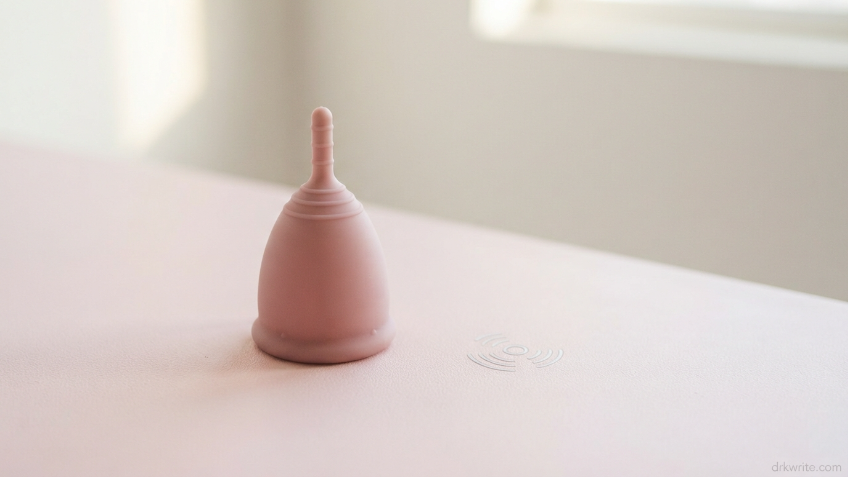
The smart menstrual cup looks like a conventional silicone cup, but what is inside the rim is anything but conventional. These devices combine medical-grade silicone with ultra-thin sensors to measure menstrual flow volume and track cycle metrics including duration, frequency, and regularity. Femtech Insider The connected app then collates this baseline data over time, allowing users to identify patterns, understand their own biology, and have more meaningful conversations with their healthcare providers.
The most prominent example is Emm, a Bristol-based femtech startup. Emm’s smart menstrual cup uses embedded sensors to track reproductive health patterns that could transform diagnosis of conditions like endometriosis — a disease that currently takes 7 to 10 years to identify — and the company has already secured 30,000 pre-orders ahead of its 2026 commercial launch. Techbuzz
This is not just a consumer gadget. Emm’s technology has been described by its board as having “the potential to serve as both a biological sample and data insights platform, unlocking new knowledge and opportunities for researchers and BioTech focused on women’s health.” EU-Startups
Diagnostic Smart Pads
On the pad side of the innovation curve, researchers at ETH Zurich have developed MenstruAI — a wearable diagnostic platform integrated directly into a standard sanitary pad. The application is elegantly simple: wear a sanitary pad with the integrated, non-electronic sensor, take a photograph of the used pad with your smartphone, and use the AI-powered app to analyze it. MedicalXpress
The device detects biomarkers including the infection and inflammation marker C-reactive protein (CRP), cancer biomarkers such as carcinoembryonic antigen (CEA) and cancer antigen 125 (CA-125), and the endometriosis biomarker CA-125. PubMed The color changes induced by these biomarkers can be read with the naked eye or analyzed by a machine-learning algorithm through a smartphone camera.
Think of it as a COVID-19 rapid test — but for your pad, and for conditions that have remained undiagnosed in women for decades.
How the Technology Actually Works
For anyone who has ever wondered what happens between the moment of fluid collection and the health insight appearing on your phone, here is the clinical breakdown.
Biometric Sensors in the Cup
The engineering challenge of placing sensors inside a flexible, insertable medical device is considerable. Emm’s cup uses medical-grade materials, with silicone’s inert nature minimizing the risk of irritation or allergic reactions often associated with other period products. Emm The biosensors themselves are ultra-thin, designed to measure real-time flow and fill-level data throughout the day without disrupting normal cup function or user comfort.
Crucially, the Bluetooth connectivity is handled with both precision and privacy in mind. The Emm cup only ever transfers data to the app when it is outside the body and synced with the charging case — meaning low-energy connectivity is never active during use. Emm
AI-Powered Pattern Recognition
Once data is synced, it is the AI layer that transforms raw numbers into personal health insights. Machine learning models trained on wearable data can now accurately predict fertility windows based on menstrual cycle patterns, body temperature fluctuations, and other symptoms — and apps like Natural Cycles process over 20 million temperature readings daily. Spikeapi
In the context of smart cups, the AI learns your individual baseline — your typical daily flow rate, your heaviest days, the duration of your cycle — and flags statistically significant deviations from that norm. This is the shift from general health advice to personal health intelligence.
The In-Pad Sensor: No Electronics Required
What makes the MenstruAI pad particularly remarkable from a clinical engineering perspective is its complete absence of electronics. The electronic-free sensor technology does not rely on a laboratory, and the prototype uses a paper-based rapid test strip — a principle familiar from Covid self-tests, but this time analyzing blood instead of saliva. ETH Zurich
When a biomarker in the menstrual blood comes into contact with a specific antibody on the test strip, a colored indicator appears, with color intensity corresponding to the concentration of the corresponding biomarker. New Atlas The smartphone app then reads these color changes using a machine-learning algorithm capable of detecting subtle protein-level differences that the naked eye cannot quantify.
The AI system was built using three distinct machine learning models: one to detect the readout zone, one to classify the type of readout, and one to perform peak segmentation on the intensity profile of the test strip to correlate the result to biomarker concentration. medRxiv
Health Insights You Can Track in 2026
As a clinician, this is the section that matters most. The value of any diagnostic tool lives entirely in what it can reveal — and what it can reveal early enough to act on. Here is what smart period products are currently capable of tracking, and why each insight is clinically significant.
Anemia Prevention Through Precise Flow Measurement
Heavy menstrual bleeding is one of the most under-reported and under-diagnosed contributors to iron-deficiency anemia in women of reproductive age. Most women have no reliable way to quantify how much blood they are actually losing each cycle — estimates based on pad saturation are notoriously inaccurate.
Smart cups change this entirely. For the first time, technology can track and measure how much menstrual fluid is actually lost during a period, with insights including typical daily flow rate and cup capacity rate — giving users the freedom to plan changes ahead of time and flag concerning increases over time. Emm
From a clinical standpoint, knowing that a patient is losing, for example, 120mL per cycle versus the typical 30 to 80mL changes the conversation entirely. It transforms a vague complaint of “heavy periods” into an actionable, quantifiable clinical concern that warrants iron panel testing and further investigation.
Hormonal Imbalance and PCOS Detection
Changes in menstrual flow volume, cycle length, and frequency are among the earliest detectable indicators of hormonal imbalances, including Polycystic Ovary Syndrome (PCOS) and thyroid dysfunction. Because smart cups build a longitudinal baseline over multiple cycles, they are uniquely positioned to detect subtle shifts that a single clinical appointment — with its inevitable recall bias — simply cannot.
The Emm app collates baseline data over time, allowing users to identify patterns, understand their own biology, and have more effective conversations with healthcare professionals about their symptoms, in just three cycles. Femtech Insider For a condition like PCOS, where irregular cycles are often the first presenting symptom, this kind of objective data can compress a diagnosis timeline from years to months.
Infection and Cancer Biomarker Screening
Perhaps the most medically significant advancement in this space is the ability to screen for infection and disease biomarkers — not in a laboratory, but in the pad itself.
Researchers developed the MenstruAI device as an early warning system for potential health issues that warrant a visit to a medical professional — not as a replacement for existing diagnostic tests, but as an accessible, front-line screening tool. New Atlas
The three biomarkers currently in the platform are deliberately chosen for their broad clinical relevance. C-reactive protein signals active infection or inflammation — including conditions like pelvic inflammatory disease and bacterial vaginosis. CEA and CA-125 elevations can indicate gynecological cancers and endometriosis. Many more protein-based biomarkers are currently being investigated and will be added to the list to reflect many other aspects of an individual’s health. ETH Zurich
It is also worth noting the scientific groundwork underlying this technology. Menstrual blood contains 385 unique proteins that are not found in circulatory blood, opening further avenues for women’s health analysis and understanding. medRxiv This is a biological resource that medicine has historically discarded. That is beginning to change.
Top Smart Period Innovations to Watch in 2026
The field is moving quickly. Here are the key innovations that clinicians and consumers alike should be monitoring closely this year.
The Emm Smart Cup is the headline device of 2026. After five years of development, thousands of design iterations, and extensive user testing, Emm has revealed what it calls the world’s first smart menstrual cup, with a commercial UK launch planned for early 2026 and other markets to follow. TechCrunch With backing from Labcorp Venture Fund and a 30,000-strong pre-order waitlist, this is the product that has officially moved smart cups from concept to commercial reality.
MenstruAI from ETH Zurich represents the academic frontier of diagnostic pad technology. Published in the peer-reviewed journal Advanced Science in 2025, it represents the first validated proof-of-concept for on-pad, lab-free biomarker detection. When researchers tested the MenstruAI device’s ability to detect biomarkers in unprocessed menstrual blood, it performed comparably to detection using a venous blood sample. New Atlas
The McMaster University Seaweed Cup is a glimpse of what is coming next. In October 2025, researchers at Canada’s McMaster University released a seaweed-powered menstrual cup that the team hopes to eventually outfit with sensors to detect infections and blood-borne illnesses. The Hustle
On the sustainability front, all of these smart reusable products carry an environmental argument that is difficult to ignore. The average woman uses between 5,000 and 15,000 disposable menstrual products in her lifetime. A reusable smart cup — lasting years while also providing continuous health data — represents a compelling convergence of environmental and medical value.
Privacy, Data Ethics, and What Your Doctor Needs to Know
As a doctor, I have a clinical obligation to address this honestly. The data generated by smart period products is among the most intimate biological data a person can produce. It includes cycle regularity, flow volume, biomarker trends, and fertility signals. In jurisdictions where reproductive health carries political and legal implications, this data is not merely personal — it can be consequential.
What responsible companies are doing:
Data collected by smart cup platforms like Emm is fully encrypted and anonymized before being sent to the connected app, where users receive personal health insights. The Hustle The charging-case syncing model — where no Bluetooth is active during wear — is a deliberate design choice that minimizes real-time data exposure.
What you should ask before buying any smart period product:
Scrutinize privacy policies and data-sharing practices closely — especially for reproductive data — and ask whether the product makes medical claims that would subject it to regulatory oversight as a medical device. BodySpec Not all femtech apps are covered by HIPAA. Read the fine print.
The role of your gynecologist remains irreplaceable:
Both the Emm team and the ETH Zurich researchers are explicit on this point. The MenstruAI device is intended as a screening tool, essentially an early warning that something may be off and should be checked by a doctor — the developers are not trying to compete with traditional diagnostic methods. The Scientist
As a clinician, I welcome these tools for exactly this reason. The biggest barrier to diagnosing endometriosis, PCOS, and early gynecological cancers is not the availability of diagnostic tests — it is the delay in patients presenting to care, often because their symptoms were normalized or dismissed. A smart pad or cup that prompts a woman to visit her doctor three months earlier could be the difference between a stage I and a stage III diagnosis. That is not hyperbole. That is oncology.
Medical skepticism toward the effectiveness of digital health solutions is a recognized challenge — and regulatory clarity, standardized evaluation protocols, and clinical validation studies will be essential to building the credibility these technologies deserve among healthcare providers. Future Market Insights The burden of proof remains, and responsible manufacturers should be pursuing it actively.
Conclusion: The Future of Period Health Is Proactive
The history of women’s healthcare has too often been a history of delayed diagnosis, dismissed symptoms, and data gaps. The average time to diagnose endometriosis is still seven to ten years. PCOS is frequently caught only after fertility struggles begin. Iron-deficiency anemia from heavy periods continues to be overlooked in routine consultations because no one measured the actual blood loss.
Smart period products in 2026 are beginning to close these gaps — not by replacing the gynecologist, but by equipping women with the objective, longitudinal, biologically rich data that makes every clinical conversation more productive.
By 2026, the global femtech market is on track to reach $75 billion, with AI-powered diagnostics that can predict health outcomes before symptoms appear representing one of the three defining shifts in the industry. Spikeapi
The technology is no longer a prototype in a university lab. It is a product in a charging case on a bathroom shelf, syncing data to an app that learns your body better with every cycle. For the first time in history, menstrual blood is not waste. It is information.
And as both a doctor and a woman’s health advocate, I believe that information — in the right hands, with the right privacy protections, and shared with the right clinician at the right time — is one of the most powerful tools in proactive women’s healthcare that we have ever seen.
Know your body. Track your data. Talk to your doctor. The future of your period health starts now.
References & Sources
- Emm — World’s First Smart Menstrual Cup. TechCrunch, November 2025.
- Dosnon, L. et al. “A Wearable In-Pad Diagnostic for the Detection of Disease Biomarkers in Menstruation Blood.” Advanced Science, 2025. DOI: 10.1002/advs.202505170
- Femtech Market Outlook 2026–2035. Precedence Research, February 2026.
- “Sanitary Towels Morph into Test Strips.” ETH Zurich News, May 2025.
- “Femtech Trends 2026: AI Wearables & Health Data APIs.” SpikeAPI, December 2025.
- Femtech Market Size & Share Analysis. Mordor Intelligence, 2025.
Medical Disclaimer: This article is for informational and educational purposes only. The technologies discussed here are not a substitute for a professional medical diagnosis or gynecological consultation. Always speak with a licensed healthcare provider before making decisions based on health-tracking data.
This article was written by a practicing physician with 5 years of clinical experience and reviewed for medical accuracy. It is intended for general health education. Consult a qualified gynecologist or healthcare provider for personalized medical advice.

I am a final-year MBBS candidate. After years of watching patients misunderstand their own diagnoses, I started writing — because accurate health information should not require a medical degree to understand. I specialise in health, health tech, and public health content, combining clinical training with a passion for making medicine accessible to everyone.”