
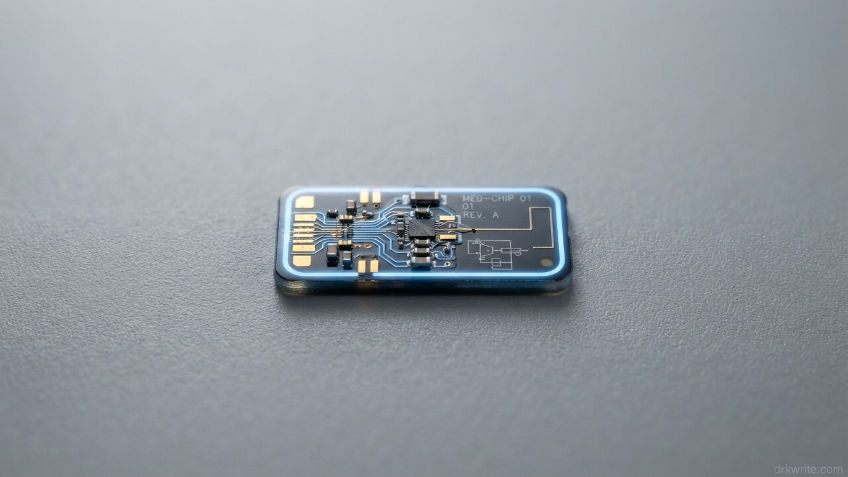
For over a century, medicine has operated on one core assumption: when the body breaks down, you treat it with a chemical. A pill, an injection, a biologic drug that floods the bloodstream, hoping to reach the right target without disturbing everything else along the way. It is a system that has saved hundreds of millions of lives. But it has also reached its ceiling.
A growing number of patients around the world suffer from conditions where no drug works anymore, or where the side effects of long-term medication become a second illness in themselves. Chronic inflammatory diseases, treatment-resistant depression, and metabolic disorders are forcing doctors and researchers to ask a question that once sounded like science fiction: what if, instead of giving the body more chemistry, we simply corrected its electrical signals?
This is the central promise of bioelectronic medicine 2026 and it is no longer theoretical. The FDA has already approved devices. Patients have already been implanted. Clinical trials are running in hundreds of hospitals worldwide. We are living through the opening chapter of a medical revolution, and in this article I want to walk you through exactly what is happening, why it matters, and why electroceuticals could genuinely change how we manage chronic disease by 2030.
How Bioelectronic Medicine Works
To understand bioelectronic medicine, you first have to understand the nervous system not as a thought-processor but as an infrastructure network. Every organ in your body, your heart, your intestines, your immune system, your liver, is constantly sending and receiving electrical signals through a vast web of nerves that connects back to the brain. These signals tell organs when to work harder, when to calm down, when to release hormones, and crucially, when to start or stop an inflammatory response.
The goal of bioelectronic medicine is to restore healthy patterns of electrical impulses, adjusting how neurons fire and thereby changing the concentrations of neurotransmitters traveling through those circuits. PNAS When an organ becomes diseased, the electrical “conversation” between that organ and the brain becomes dysregulated. Think of it as a miscommunication in the wiring rather than a problem with the organ itself. Bioelectronic devices work by intercepting that noisy electrical signal and “retuning” it back to a healthy pattern.
The concept has evolved to “Bioelectronic Medicine” when using electrical current delivered to the nervous tissue, central or peripheral, to achieve targeted therapeutic benefits. PubMed Central The devices involved range from small implantable chips placed on individual nerve fibers to wearable patches that deliver stimulation transcutaneously through the skin.
The single most important nerve in this entire field is the vagus nerve. The vagus nerve originates in the brainstem and travels via the neck, chest, and abdomen before splitting into two branches. As the longest nerve in the body, it has the ability to regulate and control the heart rate in addition to many other essential bodily activities. Science Researchers now consider the vagus nerve the superhighway of bioelectronic medicine because stimulating it can produce effects in organs across the entire body, including the immune system, something scientists did not even believe was possible until relatively recently. In a groundbreaking study published in Nature in 2000, Kevin Tracey and his colleagues showed that stimulating the vagus nerve could significantly reduce inflammation in rats. PNAS That single discovery opened the door to everything that has followed.
Three Rare and Powerful Applications in 2026
1. Treatment-Resistant Depression and Brain Stimulation
One of the most quietly transformative applications of bioelectronic medicine is in mental health, specifically in patients for whom no antidepressant has ever worked. Vagus nerve stimulation for depression has a history that most people do not know about. The approval of VNS for drug-resistant epilepsy in 1997 and subsequently for treatment-resistant depression in 2005 stands out as important milestones within the bioelectronics field. PubMed Central
But the story in 2026 has moved significantly further. Depression applications are scaling at 10.32% CAGR, catalyzed by rising mental-health awareness and inconsistent efficacy of pharmacological antidepressants. Mordor Intelligence Beyond the vagus nerve, deep brain stimulation is now being explored for patients with severe, refractory depression. These tiny implants deliver calibrated electrical pulses directly to the brain circuits responsible for mood regulation, essentially resetting the dysfunctional neural loops that conventional medications cannot reach. For patients who have failed five, six, or even ten different drug regimens over decades, this represents something genuinely new.
2. Autoimmune Disease Control: Rheumatoid Arthritis
This is where the science has produced its most concrete and celebrated victory in recent history. In July 2025, the FDA approved the SetPoint System, a device no larger than a vitamin tablet. The device is an implantable, integrated neurostimulator that stimulates the vagus nerve for 60 seconds once daily with the goal of activating natural anti-inflammatory capabilities within the body. Healio
The approval was grounded in solid clinical evidence. The SetPoint System’s FDA approval was supported by the results of the 242-patient randomized, double-blind, sham-controlled RESET-RA study, which demonstrated the system’s safety and efficacy in patients with moderately to severely active rheumatoid arthritis who had an incomplete response or intolerance to one or more biologic or targeted synthetic DMARDs. SetPoint Medical
The mechanism is elegant. The inflammatory reflex can be activated using electrical vagus nerve stimulation, which suppresses the excessive release of TNF and other pro-inflammatory cytokines and alleviates damaging inflammation. PubMed Central In other words, the device does not introduce any foreign chemical. It simply tells the body’s own anti-inflammatory system to do its job more effectively. The device placement procedure and stimulation therapy were well-tolerated, with a low rate of related serious adverse events at 1.7%, and no observations of malignancies, major cardiac events, or serious infections related to the therapy. Rheumatology Advisor
For a patient who has been taking immunosuppressant drugs for years and living with their side effects, a one-time implant that delivers 60 seconds of electrical stimulation daily and works for up to 10 years is not just a new treatment option. It is a fundamentally different relationship with their own disease.
3. Bioelectronic Gut Control: Obesity and Crohn’s Disease
The gut is perhaps the most complex electrical organ in the body after the brain itself. Enteric nervous system disorders, including inflammatory bowel disease, Crohn’s disease, and metabolic obesity, are now being targeted through bioelectronic implants that communicate directly with the gastrointestinal nerve network. SetPoint Medical published data in 2023 showing that vagus nerve stimulation is also effective for reducing inflammatory bowel disease activity, and the company is planning to evaluate its platform for other conditions including multiple sclerosis and Crohn’s disease. MedCentral
Beyond inflammation, researchers are exploring implants that regulate metabolic rate and appetite signaling by modulating the vagal pathways that govern gut-brain communication. For patients with obesity who have not responded to medication, and who are not candidates for surgical intervention, this represents a highly targeted alternative that does not involve restructuring the gastrointestinal tract.
Electroceuticals vs. Traditional Drugs: A Meaningful Comparison
The most common question I hear from patients when I explain this field is a fair one: why would I want something implanted in my body when I can just take a tablet?
It is a reasonable concern, and the answer lies in understanding the fundamental differences between how drugs and bioelectronic devices work. This field leverages targeted electrical stimulation of the nervous system to address a wide array of chronic diseases, offering a compelling alternative to traditional pharmacological interventions, representing a fundamental shift in therapeutic philosophy where the initial line of treatment for numerous chronic conditions may transition from chemical compounds to precisely calibrated electrical impulses. Nelson Advisors Blog
| Feature | Traditional Pills | Bioelectronic Medicine |
|---|---|---|
| Side Effects | Systemic, affects the whole body | Targeted to a specific nerve pathway |
| Delivery | Daily or multiple times per day | One-time implant, automatic stimulation |
| Precision | Low, affects many cell types | High, targets specific nerve fibers |
| Duration | Requires ongoing use | Designed to operate for years |
| Immune Risk | Immunosuppression with biologics | No immune compromise observed |
The precision argument is the most clinically significant one. When a patient takes a biologic drug for rheumatoid arthritis, that drug suppresses immune activity throughout the entire body, which is why patients on these medications are more vulnerable to infections and, over the long term, other complications. A bioelectronic device activates a single, specific pathway in the vagus nerve for 60 seconds a day. The immune system continues to function normally everywhere else.
The Role of Artificial Intelligence in Bioelectronics
What separates bioelectronic medicine in 2026 from the pacemakers of the 1960s is not just miniaturization. It is the integration of artificial intelligence into the feedback loop between device and body.
Closed-loop sensing, miniaturized hardware, and on-board artificial intelligence now allow devices to fine-tune stimulation dozens of times per second, opening the door to precision therapy for complex neurological and cardiovascular disorders. Mordor Intelligence In practical terms, this means the device is not simply delivering a fixed electrical pulse on a timer. It is reading the body’s real-time physiological signals, detecting when disease activity is rising, and adjusting the electrical dose automatically before the patient even experiences a symptom.
A milestone in this direction came in February 2025. Medtronic gained FDA clearance for the BrainSense Adaptive DBS system, the first deep-brain stimulator that adjusts therapy using real-time neural feedback. Mordor Intelligence This is the closed-loop system that researchers have been working toward for decades: a device that does not just stimulate but listens, learns, and adapts.
The implications extend beyond convenience. Predictive bioelectronic systems have the theoretical capacity to detect an inflammatory flare, a seizure precursor, or a cardiac arrhythmia before it fully develops and respond faster than any human physician could prescribe medication. This is the direction the field is moving, and it is moving quickly.
Challenges and Ethical Concerns We Must Address Honestly
As a doctor, I believe in presenting the full picture of any treatment, and bioelectronic medicine carries real challenges that deserve serious discussion.
The Cost and Access Question
The electroceuticals and bioelectric medicine market stood at USD 25.63 billion in 2025 and is projected to reach USD 36.31 billion by 2030. Mordor Intelligence The growth of a market does not automatically mean democratized access. Implantable bioelectronic devices are expensive to manufacture, require surgical placement, and involve follow-up care infrastructure that is not available equally in all healthcare systems. For patients in low and middle income countries, the question of whether this technology will remain the exclusive property of wealthy healthcare systems is a legitimate and urgent one. Regulatory bodies and manufacturers will need to address reimbursement frameworks aggressively if bioelectronic medicine is to fulfill its potential rather than deepen existing health inequalities.
Security of the Connected Body
In recent years, the healthcare sector has faced increasingly intense and complex cybersecurity threats. Nelson Advisors Blog Bioelectronic implants communicate wirelessly with external devices for programming, monitoring, and charging. This means they exist within the Internet of Medical Things, and like any connected device, they carry cybersecurity risks. A compromised pacemaker or neurostimulator is not an abstract concern. Researchers have already demonstrated theoretical vulnerabilities in medical device security, and as these devices become more sophisticated and more networked, the regulatory framework around their digital security must keep pace with their clinical capabilities.
Long-Term Safety in Novel Applications
It is important to acknowledge that for many of the newer applications described in this article, such as gut stimulation for metabolic disease and brain stimulation for depression, the long-term safety data beyond five to ten years simply does not yet exist in large populations. The clinical results so far are genuinely encouraging, but medicine has been humbled before by therapies that looked transformative in early trials. Rigorous post-market surveillance and honest reporting of adverse events will be essential.
Conclusion: The Era of Digital Medicine Has Begun
Standing in clinic today, I prescribe medications daily. I counsel patients on drug interactions, manage side effects, and watch some people cycle through treatment after treatment looking for something that actually works. Bioelectronic medicine does not replace that conversation yet. But it is changing the terms of it.
Electric medicine is rapidly emerging as a pivotal and transformative health technology sub-sector in 2025, with significant advancements including device miniaturization, the integration of artificial intelligence for personalized therapies, and the proliferation of wearable solutions. Nelson Advisors Blog What began with the cardiac pacemaker has evolved into a discipline capable of addressing autoimmune disease, neurological dysfunction, metabolic disorders, and mental health conditions, all without introducing a single chemical compound into the bloodstream.
The era of chemical medicine is not ending. But it is being joined by something new: a form of medicine that speaks the body’s own language, that corrects electrical dysfunction the way an engineer corrects a faulty circuit, precisely, locally, and intelligently.
Your next appointment with a doctor may still end with a prescription. But it is increasingly possible that by 2030, it ends with a programming session instead.

I am a final-year MBBS candidate. After years of watching patients misunderstand their own diagnoses, I started writing — because accurate health information should not require a medical degree to understand. I specialise in health, health tech, and public health content, combining clinical training with a passion for making medicine accessible to everyone.”