
Medical Disclaimer: This article is for general educational purposes only and is not a substitute for professional medical advice, diagnosis, or treatment. Iron deficiency and anemia should be confirmed through blood testing and managed under the guidance of a healthcare provider, since incorrect supplementation can cause harm.
During one of my clinical rotations, a woman in her late twenties came in describing constant tiredness that no amount of sleep seemed to fix, along with hair that had started shedding more than usual and a strange craving to chew on ice. She had already tried adjusting her sleep schedule and cutting back on caffeine, assuming she was simply burned out. Her blood work told a different story: her ferritin, the protein that reflects the body’s stored iron, was almost undetectable. She was not lazy, and she was not imagining it. She was significantly iron deficient, a condition that affects a large share of women at some point in their lives and is frequently missed or dismissed as ordinary fatigue.
Iron deficiency is one of the most common nutritional deficiencies in women worldwide, yet it is also one of the most under-recognized, because its symptoms overlap so heavily with everyday tiredness, stress, and busy schedules.
Why Women Are Disproportionately Affected
Iron deficiency is not evenly distributed between men and women, and the reasons are largely physiological:
- Menstruation causes regular, ongoing iron loss, and heavier periods can significantly increase this loss
- Pregnancy dramatically increases iron requirements to support increased blood volume and fetal development
- Women of reproductive age generally require close to double the daily iron intake of men, yet often do not adjust their diets accordingly
- Conditions such as fibroids or heavy menstrual bleeding can push iron loss well beyond what diet alone replaces
This is why iron deficiency is not simply a matter of “eating badly.” Many women with reasonably balanced diets still become deficient because their iron losses outpace typical intake, particularly during heavier cycles or pregnancy.
Recognizing the Signs
Iron deficiency symptoms tend to develop gradually, which is part of why they are so easy to dismiss. Common signs include:
- Persistent fatigue that does not improve with rest
- Pale skin, especially noticeable in the face and inner eyelids
- Shortness of breath during activities that previously felt easy
- Brittle nails or hair thinning and shedding
- Restless legs, particularly at night
- Unusual cravings to chew ice, dirt, or starch, a phenomenon known as pica
- Difficulty concentrating, sometimes described as brain fog
- Cold hands and feet
Many of these symptoms are nonspecific, meaning they overlap with other conditions such as thyroid dysfunction or general stress, which is exactly why they should be evaluated with bloodwork rather than assumed.
Iron Deficiency Versus Iron-Deficiency Anemia
These two terms are related but not identical, and the distinction matters clinically. Iron deficiency refers to depleted iron stores in the body, reflected by low ferritin. Iron-deficiency anemia is a more advanced stage, where iron stores are low enough that the body can no longer produce sufficient healthy red blood cells, which is confirmed through a full blood count showing low hemoglobin.
A person can be iron deficient with symptoms well before anemia shows up on a standard blood count, which is one reason ferritin testing specifically is often more useful than a basic blood count alone when deficiency is suspected.
Getting Diagnosed Properly
Self-diagnosing iron deficiency from symptoms alone is unreliable, since fatigue and hair changes have many possible causes. A proper evaluation typically involves:
- A complete blood count to check hemoglobin and red blood cell characteristics
- A ferritin test to assess actual iron stores
- In some cases, additional iron studies to understand the full picture
This matters because taking iron supplements without confirmed deficiency is not harmless. Iron overload can cause its own health problems, including digestive damage and, in people with certain genetic conditions like hemochromatosis, more serious organ effects. This is a case where guessing is genuinely risky, and testing first is the responsible approach.
Food Sources of Iron, and Why Type Matters
Dietary iron comes in two forms, and the difference affects how well the body absorbs it.
Heme iron, found in animal sources, is absorbed considerably more efficiently by the body:
- Red meat, particularly beef and lamb
- Poultry, especially dark meat
- Fish and shellfish, including sardines and mussels
Non-heme iron, found in plant sources, is absorbed less efficiently but can still meaningfully contribute to intake:
- Lentils, chickpeas, and other legumes
- Tofu and tempeh
- Spinach and other dark leafy greens
- Fortified cereals and grains
- Pumpkin seeds
This does not mean plant-based eaters cannot maintain healthy iron levels. It means they typically need to be more intentional, both about quantity and about pairing foods strategically.
A Practical Trick Most People Don’t Know
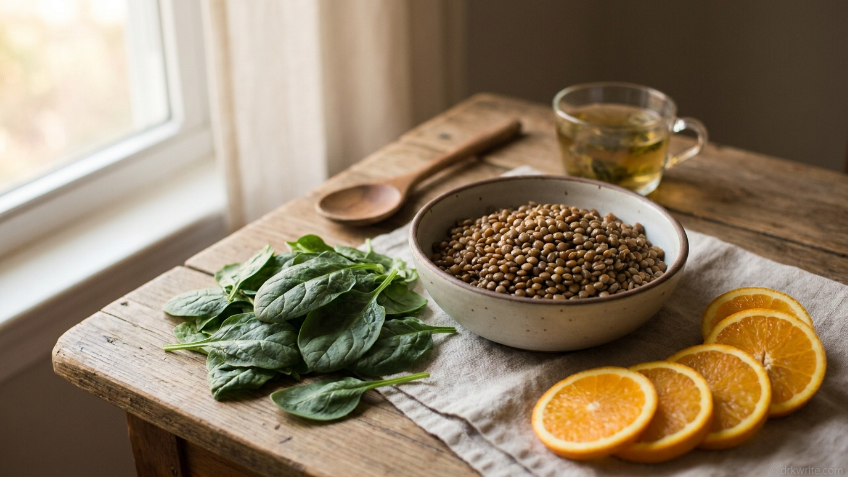
Vitamin C significantly enhances non-heme iron absorption when eaten in the same meal. Pairing lentils with tomatoes, spinach with a squeeze of lemon, or a fortified cereal with a side of orange or strawberries can meaningfully increase how much iron the body actually absorbs from that meal.
On the flip side, coffee, tea, and calcium-rich foods can reduce iron absorption when consumed at the same time as an iron-rich meal. This does not mean avoiding coffee altogether, but spacing it an hour or so away from iron-focused meals can make a real difference over time.
When Food Alone Isn’t Enough
For mild, diet-related depletion, food-first strategies can be effective over time. However, for confirmed iron-deficiency anemia, or in cases of heavy menstrual bleeding or pregnancy, diet changes alone are often too slow to correct the deficiency, and supplementation guided by a healthcare provider becomes necessary. Iron supplements come in different forms and doses, and the right choice depends on the severity of the deficiency, tolerability, and individual health history, which is why this is best determined with a doctor rather than through self-selection at a pharmacy.
Who Should Be Screened More Proactively
- Women with consistently heavy menstrual periods
- Pregnant women, as part of routine prenatal care
- People following a strict vegetarian or vegan diet long term
- Frequent blood donors
- Anyone with a diagnosed gastrointestinal condition affecting absorption, such as celiac disease
A Realistic Way to Think About It
Iron deficiency in women is common enough that it should be considered a routine possibility whenever unexplained fatigue, hair changes, or breathlessness show up, rather than something assumed to be “just stress” or “just being busy.” The reassuring part is that once identified through proper testing, it is highly treatable, whether through targeted dietary changes, supplementation, or addressing the underlying cause of blood loss. The key step that gets skipped most often is simply asking for the bloodwork in the first place.
Frequently Asked Questions
Q1: How do I know if my tiredness is from iron deficiency or just poor sleep? You generally cannot tell from symptoms alone, since both cause similar fatigue. A ferritin blood test is the reliable way to distinguish between them.
Q2: Can drinking more tea or coffee actually contribute to iron deficiency? Heavy tea or coffee consumption around meals can reduce iron absorption over time, which may contribute to lower iron status in people who already have marginal intake.
Q3: Is it safe to take iron supplements without a blood test first? It is not advisable. Taking iron without confirmed deficiency can lead to iron overload, which carries its own health risks, particularly with prolonged use.
Q4: How long does it take to correct iron deficiency through diet? Mild deficiency addressed through diet alone can take several months to fully replenish stores, which is why more significant deficiencies are often paired with supplementation for a faster, guided correction.
Q5: Does birth control affect iron levels? Some hormonal birth control methods reduce menstrual blood loss and may actually help preserve iron stores, while irregular or heavy bleeding patterns from other methods can have the opposite effect. This varies by individual and method.
This article is intended for general educational purposes and does not replace personalized medical advice. If you are experiencing symptoms of iron deficiency, please speak with a healthcare provider and request appropriate blood testing before starting any iron supplement.

I am a final-year MBBS candidate. After years of watching patients misunderstand their own diagnoses, I started writing — because accurate health information should not require a medical degree to understand. I specialise in health, health tech, and public health content, combining clinical training with a passion for making medicine accessible to everyone.”