First, Let’s Understand Cancer
Cancer is not a foreign object inside the body. It actually develops from the body’s own cells. Normally, cells grow, divide, and die in a controlled way. However, sometimes the genes that control this process become damaged or mutated. When this happens, cells may start growing uncontrollably.
Over time, these abnormal cells can form a tumor and may spread to other parts of the body. Another important change also happens. Cancer cells learn how to avoid being detected by the immune system.
The immune system is designed to find and destroy abnormal cells. But cancer cells can develop ways to hide from it.
What Cancer Cells Do
Cancer cells use several tactics to survive inside the body.
They may hide from immune cells.
They may suppress the immune response.
They may imitate normal healthy cells.
In Simple Terms
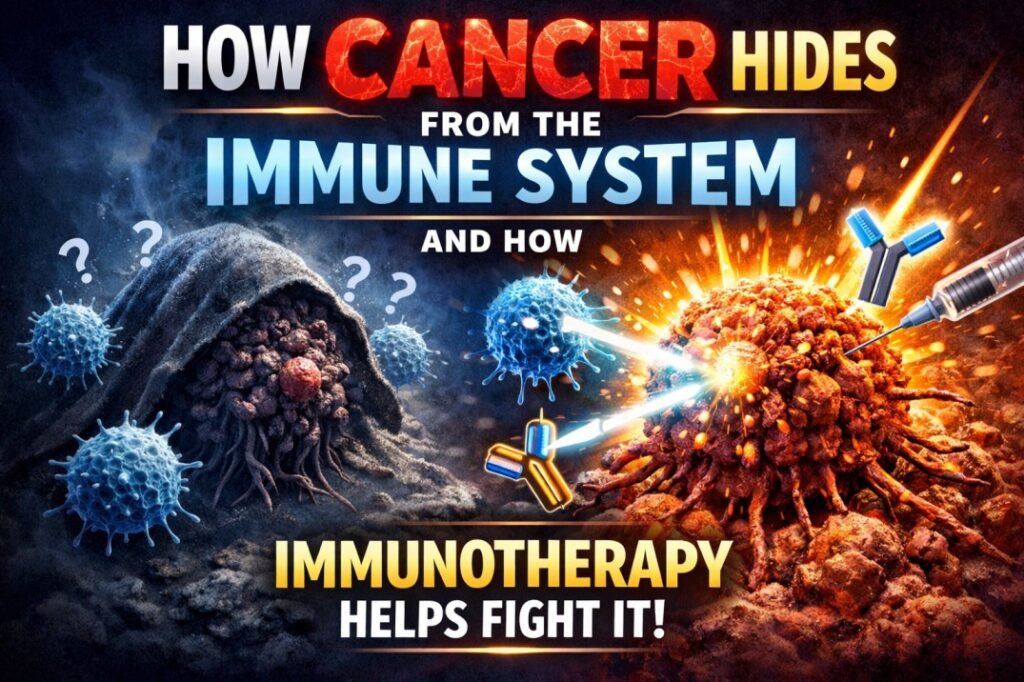
Cancer cells behave like they are wearing a disguise.
They trick the body’s defense system into thinking they are normal.
Because of this, the immune system may not attack them even though they are harmful.
It is important to understand that the immune system is not necessarily weak. In many cases, it is simply being deceived.
How Do Cancer Cells Hide from the Immune System?
Researchers have discovered that cancer cells use different strategies to avoid detection.
Strategy 1: Reducing Warning Signals
Normally, abnormal cells display signals on their surface that alert immune cells. These signals act like warning flags.
Some cancer cells reduce or hide these signals. When this happens, immune cells have difficulty recognizing that something is wrong.
Strategy 2: Using Immune Checkpoints
The immune system uses special proteins called checkpoints to prevent it from attacking normal cells.
Cancer cells can exploit this system. They may produce proteins such as PD L1 that send a message to immune cells saying, “Do not attack.”
When immune cells receive this signal, they may stop their response.
Strategy 3: Creating a Protective Environment
Tumors can also change the area around them. This is known as the tumor microenvironment.
In this environment, certain chemical signals suppress immune activity. Even if immune cells reach the tumor, they may not function properly.
Why the Immune System Does Not Always Stop Cancer
Many people believe cancer develops because the immune system is weak. In reality, the situation is more complex.
The immune system may still recognize abnormal cells. However, cancer cells send misleading signals that make them appear normal.
In simple terms, the immune system is told:
This cell is normal. Do not attack.
Because of these false signals, the immune system may leave cancer cells alone.
How Immunotherapy Works
Traditional cancer treatments such as chemotherapy and radiation aim to destroy cancer cells directly.
Immunotherapy works differently. Instead of attacking the tumor itself, it helps the immune system recognize and fight cancer.
Immunotherapy may work by:
Removing the disguise used by cancer cells
Blocking the “do not attack” signals such as PD L1
Reactivating immune cells that were previously turned off
In simple words, immunotherapy helps the immune system recognize that the cancer cells are abnormal.
A Simple Example
Imagine the immune system as security guards in a building.
Normally, the guards quickly remove anyone who does not belong there. But cancer cells act like people wearing fake identification badges.
Because the guards believe the badge is real, they allow them to stay.
Immunotherapy removes the fake badge. Once the disguise is gone, the security guards can identify the threat and take action.
Can Immunotherapy Cure Cancer?
Immunotherapy has changed the way doctors treat certain cancers. However, it is not a universal cure.
In some cancers, such as melanoma, certain lung cancers, and some blood cancers, immunotherapy has led to long lasting remission for some patients.
In these cases, the immune system may learn to recognize cancer cells and remember them. This immune memory can help control the disease for many years.
However, not every patient benefits from immunotherapy.
Cancer is not a single disease. It includes many different conditions, each with its own biological behavior. Because of this, treatments may work well for some patients but not for others.
When Immunotherapy Works Best
Research shows that immunotherapy may work better in certain situations.
It may be more effective when tumors contain many genetic mutations. These mutations make cancer cells easier for the immune system to recognize.
It may also work better when the immune system can still be activated and when the tumor environment is not strongly suppressing immune activity.
Conclusion
Immunotherapy represents an important advancement in cancer treatment. Instead of only attacking cancer cells directly, it helps the body’s natural defense system respond more effectively.
For some patients, immunotherapy can lead to long term remission and improved survival. For others, it may help control the disease even if a complete cure is not possible.
Scientists and doctors continue to study how immunotherapy works and how it can be improved. Ongoing research may help expand its benefits to more patients in the future.
Frequently Asked Questions
What is immunotherapy?
Immunotherapy is a type of medical treatment that helps the immune system recognize and fight cancer cells more effectively.
Does immunotherapy work for all cancers?
No. Immunotherapy works well for some cancers but not for all types. Researchers are still studying which patients benefit the most.
Is immunotherapy safer than chemotherapy?
Immunotherapy can have fewer side effects for some patients, but it can still cause immune related reactions. Treatment decisions should always be made with a qualified healthcare professional.
Can the immune system remember cancer?
In some cases, yes. The immune system can develop memory cells that help it recognize cancer cells again if they return.
Medical Disclaimer
This article is for educational and informational purposes only. It should not be used as a substitute for professional medical advice, diagnosis, or treatment. Always consult a qualified healthcare professional for guidance about medical conditions or treatment options.

I am an MBBS student and medical content writer specializing in health education, medical research, public health awareness, and informational guides. With a strong foundation in clinical knowledge and evidence-based medicine, I write accurate, SEO-optimized, and reader-focused articles. My content covers healthcare topics, medical updates, government welfare programs, and educational resources to help readers access reliable and up-to-date information. I am committed to delivering trustworthy, well-structured, and search-engine-friendly content that adds real value.