
By a Medical Content Writer | Reviewed for Accuracy | Updated 2025
Have you ever wondered what goes on inside your body when something feels wrong? Before modern medicine, doctors had to rely mostly on physical exams and educated guesses. Today, medical imaging has changed everything. It lets doctors look inside your body without a single cut, and in many cases, it saves lives by catching diseases early.
In this article, we will walk you through exactly how doctors use medical imaging, what each type does, and why it matters for your health. No complicated jargon. Just clear, honest information.
What Is Medical Imaging?
Medical imaging is the process of creating visual pictures of the inside of the human body. These images help doctors see organs, bones, tissues, and blood vessels to find problems that are not visible from the outside.
Think of it this way: if your car breaks down, a mechanic uses a diagnostic tool to look inside the engine without taking it apart. Medical imaging does the same thing for the human body.
Doctors use these images to:
- Detect tumors, fractures, or infections
- Monitor how a disease is progressing
- Guide surgeries or procedures
- Check if treatment is working
- Confirm or rule out a diagnosis
The Main Types of Medical Imaging
There is no single “best” imaging tool. Each one works differently and is suited for specific conditions. Here is a details of the most commonly used types.
1. X-Ray — The Classic Starting Point
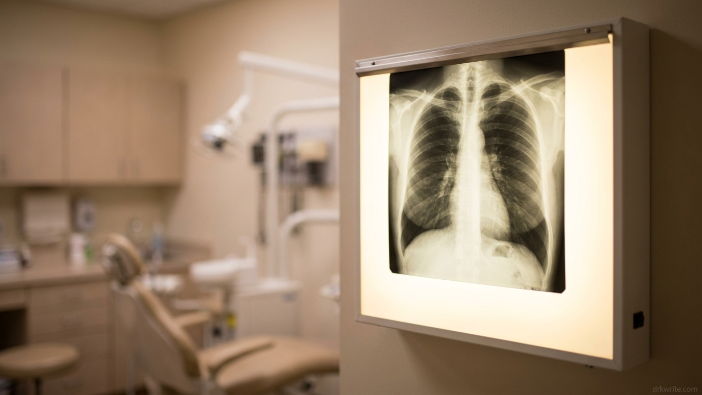
X-rays are the oldest and most widely used form of medical imaging. They were discovered in 1895 by Wilhelm Röntgen, and they are still one of the first tools doctors reach for today.
How it works: A small amount of radiation passes through your body. Dense structures like bones block the rays and appear white on the image. Soft tissues allow more rays through and appear darker.
What it is used for:
- Broken bones and fractures
- Chest infections like pneumonia
- Detecting fluid in the lungs
- Checking joint alignment
- Spotting swallowed foreign objects in children
What doctors look for: Changes in bone shape, unusual shadows, or fluid buildup. A radiologist (a doctor trained in reading images) carefully studies the x-ray and sends a report to your physician.
Is it safe? Yes, for most people. The radiation dose is very small, roughly equal to the natural radiation you receive in a few days of normal life. However, pregnant women are usually asked to avoid x-rays unless absolutely necessary.
2. CT Scan (Computed Tomography) Detailed Cross-Section Views
A CT scan is like an advanced version of an x-ray. Instead of one flat image, it takes hundreds of images from different angles and combines them into detailed cross-sectional pictures, almost like slicing a loaf of bread and looking at each slice.
How it works: You lie on a table that slides through a doughnut-shaped machine. X-ray beams rotate around you, and a computer assembles the data into 3D images.
What it is used for:
- Internal bleeding or injuries after an accident
- Detecting cancers and tumors
- Examining blood clots in the lungs
- Guiding biopsies (collecting tissue samples)
- Evaluating head injuries and strokes
Speed matters: CT scans are fast; they can be done in minutes. That is why they are so valuable in emergencies. A doctor in an ER can assess a serious trauma patient much faster with a CT scan than with older methods.
Contrast dye: Sometimes a dye is injected into the bloodstream to make certain areas show up more clearly. This is called contrast-enhanced CT.
3. MRI (Magnetic Resonance Imaging) — Best for Soft Tissue
MRI is often considered the gold standard when it comes to imaging soft tissue areas like the brain, spinal cord, muscles, tendons, and organs.
How it works: MRI uses powerful magnets and radio waves (no radiation) to create detailed images. The magnetic field causes hydrogen atoms in your body to align, and when radio waves are directed at them, they send back signals that are turned into images.
What it is used for:
- Brain and spinal cord conditions
- Multiple sclerosis, tumors, aneurysms
- Knee, shoulder, and joint injuries
- Heart and liver disease
- Evaluating pelvic and reproductive organs
What the experience is like: You will lie inside a large tube-shaped machine. It can be noisy — the machine makes loud knocking sounds. The scan usually takes 20 to 60 minutes depending on the area being examined. People with metal implants like pacemakers or certain joint replacements may not be able to have an MRI.
Advantage over CT: MRI does not use radiation. For conditions requiring repeated imaging over time — like cancer monitoring — this is a major benefit.
4. Ultrasound — Safe, Real-Time Imaging
Most people associate ultrasound with pregnancy, but its uses go far beyond that. Ultrasound is one of the safest imaging tools available because it uses sound waves — no radiation at all.
How it works: A small handheld device called a transducer is pressed against the skin. It sends high-frequency sound waves into the body. These waves bounce back (echo) when they hit organs or tissues, and a computer converts the echoes into live images.
What it is used for:
- Monitoring fetal development during pregnancy
- Examining the heart (echocardiogram)
- Detecting gallstones, kidney stones
- Evaluating liver, thyroid, and kidneys
- Guiding injections and drainage procedures
Why doctors love it: Ultrasound shows real-time movement. Doctors can watch blood flow through vessels, see a baby move, or watch a heart beat — all in the moment. It is also portable, inexpensive, and fast.
5. PET Scan (Positron Emission Tomography) — Seeing How the Body Functions
While most imaging tools show the structure of the body, a PET scan shows how the body is functioning at a cellular level. It is particularly powerful in cancer care.
How it works: A small amount of radioactive sugar is injected into the bloodstream. Cancer cells and other rapidly dividing cells absorb more sugar than normal cells. The scanner detects where the sugar concentrates and creates a map of metabolic activity.
What it is used for:
- Detecting and staging cancer
- Evaluating whether cancer has spread
- Checking how well cancer treatment is working
- Diagnosing brain disorders like Alzheimer’s disease
- Assessing heart disease
PET-CT combination: Most modern facilities combine a PET scan with a CT scan in a single session. This gives doctors both functional information (PET) and structural detail (CT) at the same time.
6. Nuclear Medicine Imaging, Tracking Body Functions
Similar to PET, nuclear medicine uses radioactive substances called tracers to evaluate organ function. A bone scan, for example, can detect cancer that has spread to bones long before it shows up on a regular x-ray.
Common examples:
- Bone scan (for cancer, infection, or stress fractures)
- Thyroid scan (to check thyroid function and detect nodules)
- MUGA scan (to assess heart function before chemotherapy)
How the Diagnosis Process Actually Works
Here is what typically happens when your doctor orders an imaging test:
Step 1 — The Doctor’s Order: Based on your symptoms, medical history, and physical exam, your doctor decides which imaging test is most appropriate.
Step 2 — The Imaging Procedure: You go to a radiology department, imaging center, or hospital. Trained technologists perform the scan. They are not the ones who read it, they make sure the images are captured correctly.
Step 3 — The Radiologist’s Report: A radiologist, a physician who specializes in interpreting medical images, studies the scans. They write a detailed report describing what they see.
Step 4 — Your Doctor Reviews the Results: Your primary doctor reviews the radiologist’s findings alongside your symptoms, blood tests, and physical exam to form a complete diagnosis.
Step 5 — Shared Decision Making: Your doctor discusses the findings with you and outlines next steps — whether that means further testing, treatment, or simply monitoring.
Medical Imaging and Early Disease Detection
One of the greatest benefits of medical imaging is catching disease early, often before symptoms even appear. Mammograms can detect breast cancer in its earliest stages. Low-dose CT scans are now recommended for early lung cancer screening in high-risk individuals. Colonoscopy with imaging guidance can catch pre-cancerous polyps before they turn into cancer.
Early detection often leads to better outcomes, less aggressive treatment, and improved survival rates. That is not a small thing, for many people, it is the difference between life and death.
What Imaging Cannot Do
It is important to be honest here. Medical imaging is a powerful tool, but it is not perfect.
- Images show structure but not always the cause
- Small lesions can sometimes be missed
- Some conditions look similar on images, requiring additional tests
- A benign mass can sometimes look alarming, causing unnecessary worry (false positives)
- Not every symptom has a visible cause on imaging
This is why doctors never rely on imaging alone. A good diagnosis combines the image findings with clinical history, lab tests, and the doctor’s judgment.
The Role of AI in Medical Imaging
Artificial intelligence is now being used to help radiologists read images faster and more accurately. AI algorithms can flag potential areas of concern, like a suspicious spot on a lung CT, so the radiologist can focus on the most critical areas first.
AI does not replace the radiologist. Instead, it acts as a second set of eyes, helping to reduce errors and speed up diagnosis. This technology is still evolving, but it is already making a real difference in busy hospitals.
Frequently Asked Questions (FAQ)
Is medical imaging safe?
Most imaging techniques are very safe. X-rays and CT scans use small amounts of radiation, which carry a minimal risk when used appropriately. MRI and ultrasound use no radiation at all. Your doctor will always weigh the benefits against the risks before ordering any scan.
Will I need to prepare before a scan?
It depends on the type of scan. Some scans require fasting beforehand (like an abdominal ultrasound or certain CT scans). For an MRI, you may be asked to remove all metal objects. Your doctor or the imaging center will give you specific instructions ahead of time.
How long does it take to get imaging results?
It varies. In emergency situations, a radiologist may read the scan within minutes. For routine scans, results may take one to three business days. Your doctor will contact you once the report is available.
Can I ask to see my own imaging results?
Absolutely. You have the right to access your medical images and reports. Many hospitals now offer patient portals where you can view your imaging results online.
What is the difference between a radiologist and a radiographer?
A radiographer (or radiologic technologist) is the trained professional who operates the imaging equipment and takes the scans. A radiologist is the physician who reads and interprets the images and writes the diagnostic report.
Does medical imaging hurt?
Most imaging tests are painless. You might feel a slight pinch if contrast dye is injected, or mild discomfort from staying still in certain positions. MRI machines can be noisy, and some people experience mild anxiety in enclosed spaces. Speak with your care team if you have concerns.
Why do some people need multiple scans?
A single image may not give the full picture. Different imaging types reveal different information. Sometimes a follow-up scan is needed to monitor a condition over time, check if a treatment is working, or clarify something unclear in an earlier image.
Can children safely have medical imaging done?
Yes, but doctors are especially careful about minimizing radiation exposure in children. Whenever possible, ultrasound or MRI (which have no radiation) are preferred for pediatric patients.
Final Thoughts
Medical imaging has transformed modern medicine. What once required exploratory surgery can now be seen with a simple, painless scan. These technologies help doctors make faster, more accurate diagnoses — and ultimately, they help save lives.
If your doctor orders an imaging test, try not to feel anxious. It is a tool designed to give your care team the clearest possible picture of what is happening inside your body. And the clearer the picture, the better the care you receive.
If you ever have questions about an imaging test your doctor recommends, do not hesitate to ask. Understanding your own health is one of the most powerful things you can do.
This article is for informational purposes only and does not constitute medical advice. Always consult a qualified healthcare professional for diagnosis and treatment.

I am a final-year MBBS candidate. After years of watching patients misunderstand their own diagnoses, I started writing — because accurate health information should not require a medical degree to understand. I specialise in health, health tech, and public health content, combining clinical training with a passion for making medicine accessible to everyone.”