
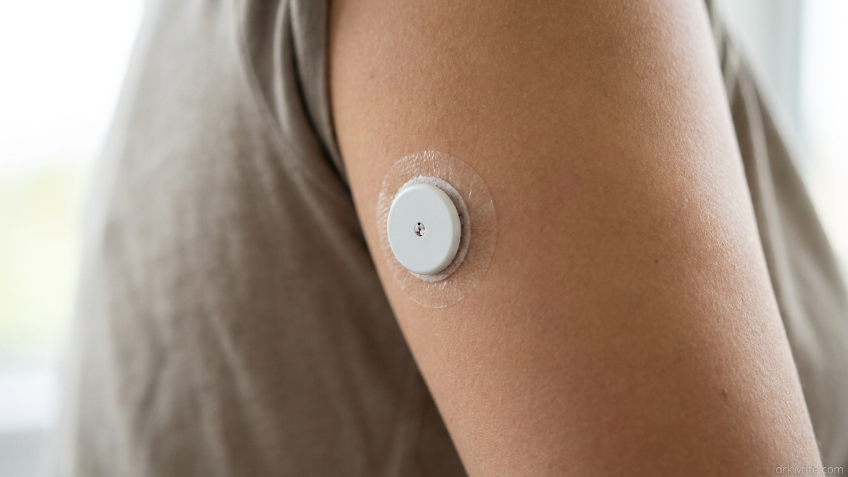
A friend of mine who has never had a blood sugar issue in her life showed up to brunch a few months back with a small round sensor stuck to the back of her arm. My first thought was that something was wrong. It turned out she’d started using a continuous glucose monitor — the same kind of device people with diabetes rely on — purely out of curiosity about her own metabolic health.
She’s not alone. Over the past couple of years, wearable health tech has moved way past step counters and heart rate monitors. Now it’s continuous glucose monitors (CGMs), and they’re being marketed directly to people who have completely normal blood sugar, positioned less as a medical device and more as a personal insights tool. I got curious enough that I spent real time looking into the actual research behind this trend, not just the marketing behind it, because there’s a pretty significant gap between how these products are sold and what the science currently supports.
This article walks through what CGMs actually do, why they’ve suddenly become a mainstream wellness product, what legitimate research says about using them without diabetes, and how to think about whether one is actually worth your money and effort.
A quick disclaimer first: I’m a health writer, not a doctor. This article isn’t medical advice, and if you have any concerns about your blood sugar, metabolic health, or a family history of diabetes, that’s a conversation for your doctor, not a wearable device on its own.
What a CGM Actually Does
A continuous glucose monitor is a small, wearable sensor, usually placed on the back of the upper arm or abdomen, that measures glucose levels in the fluid just beneath your skin. Instead of a single fingerstick reading at one moment in time, it gives you a continuous stream of data throughout the day and night, tracking whether your glucose is rising, falling, or holding steady.
That data gets sent to a smartphone app, which shows you graphs of your glucose levels over time, often overlaid with information about meals, workouts, or sleep. For people managing diabetes, this has been a genuinely transformative technology, replacing the need for constant fingerstick testing and giving both patients and doctors a much fuller picture of blood sugar patterns throughout the day.
Why Healthy People Started Wearing Them
The shift toward non-diabetic use is relatively recent, and it lines up with a broader trend in wellness: the desire for real-time, personalized feedback about your own body instead of generic advice that’s supposed to apply to everyone. Wearables that track sleep, heart rate variability, and recovery already normalized the idea of using biometric data as a daily decision-making tool. Glucose monitoring was, in some ways, the natural next step.
Companies now market “wellness CGMs” specifically to people without diabetes, with marketing built around ideas like seeing exactly how a specific meal affects your energy, identifying foods that spike your blood sugar more than expected, and fine-tuning your diet based on your own data rather than general nutrition guidelines. The appeal is obvious. Instead of following a one-size-fits-all eating plan, you get to see, in real time, how your own body responds to your own choices.
What the Research Actually Shows
This is where things get more complicated than the marketing suggests, and it’s worth being honest about that instead of just repeating the hype.
Some research groups have been actively studying whether CGM-guided lifestyle changes in non-diabetic adults can meaningfully improve cardiovascular risk factors, looking at how glucose fluctuations even within a normal range might relate to things like vascular function and inflammation. This is a genuinely interesting area of research, and it reflects real scientific curiosity about whether glucose data could help healthy people fine-tune diet and exercise choices before any metabolic problems develop.
At the same time, some public health researchers have been notably more cautious. A review from a major public health institution pointed out that while these devices have been genuinely transformative for people with diabetes, there’s currently limited evidence that they provide meaningful health benefits for people who don’t have the condition. In other words, the technology works exactly as advertised in terms of the data it produces, but whether that data translates into meaningfully better health outcomes for someone with completely normal blood sugar is still an open question, not a settled one.
I think that gap is important to sit with. It doesn’t mean CGMs are useless for healthy people, but it does mean the confident, almost prescriptive marketing language (“optimize your metabolic health,” “fine-tune your body’s performance”) is running ahead of what’s actually been proven in rigorous studies.
What I Found Genuinely Useful vs. Overhyped
After digging through both the enthusiast coverage and the more skeptical research, here’s how I’d break down what seems reasonably supported versus what feels like it’s overselling the technology.
Reasonably useful:
- Seeing that certain meals cause a bigger glucose spike than others for you personally, which can be a helpful, personalized data point if you’re already trying to eat in a way that supports steady energy.
- Noticing patterns around how stress, sleep quality, or specific workouts seem to affect your glucose trends over time.
- Making the connection between your subjective experience (an afternoon energy crash, for example) and an objective data point, which some people find genuinely motivating for building consistent habits.
More overhyped than proven:
- The idea that avoiding all glucose spikes is inherently necessary or healthy for someone with completely normal blood sugar regulation. Some fluctuation after meals is a completely normal physiological response, not automatically a warning sign.
- Marketing language suggesting a CGM alone will “optimize” your metabolism or performance, which isn’t something current research clearly supports for non-diabetic users.
- The assumption that more data is automatically better. For some people, constant glucose tracking can actually increase anxiety around food choices rather than genuinely improving health decisions.
A Reasonable Way to Think About Trying One
If you’re curious about trying a CGM as a healthy adult, here’s a more grounded way to approach it than just following influencer hype:
Get clear on your actual goal. Are you trying to understand your energy crashes, curious about how certain foods affect you, or just generally interested in your metabolic patterns? Having a specific question in mind makes the data far more useful than passively watching numbers with no context.
Treat it as one data point, not a verdict. A glucose spike after a meal isn’t automatically bad, and a flat line isn’t automatically good. Context — what you ate, how much you slept, whether you exercised — matters far more than the raw number alone.
Watch your relationship with the data. If checking your glucose graph starts to feel stressful, or you notice yourself avoiding entire food groups based on a single spike, that’s worth stepping back from rather than pushing through.
Don’t skip your doctor if something seems off. If you notice patterns that genuinely concern you — very high fasting numbers, for example — that’s a reason to talk to a healthcare provider and get proper testing, not to rely on a wellness device’s interpretation alone.
Consider whether the cost is worth it for your specific goal. These devices, along with the subscription apps that often come with them, aren’t cheap. If your actual goal is generally eating more whole foods and reducing added sugar, you may get similar practical benefit from simpler, well-established dietary changes without the ongoing cost.
How This Fits Into the Bigger Wearable Trend
CGMs for healthy adults are part of a much larger shift toward continuous, real-time health tracking. Sleep trackers, heart rate variability monitors, and recovery scores have already trained a lot of people to think about their health in terms of daily, quantifiable data rather than occasional checkups. Some newer approaches even combine glucose data with other wearables, layering sleep quality, activity levels, and glucose trends together to build a fuller picture of daily patterns.
This can be genuinely valuable for people who are motivated by data and want to understand their own patterns more precisely. But it’s worth staying aware that manufacturers have an obvious financial incentive to make their devices sound essential, and the enthusiasm in marketing materials doesn’t always match the more measured tone of independent research. The most reliable path is usually reading both sides — the enthusiast coverage and the more cautious academic research — before deciding whether a device fits your actual needs.
Comparing the Two Sides of the Story
Since so much of my own confusion came from reading sources that flatly contradicted each other, I think it’s worth laying out both perspectives side by side rather than picking one and pretending the debate doesn’t exist.
The enthusiast case, generally made by wearable companies and health-tech publications, argues that continuous data gives you something a once-a-year checkup never could: a real-time feedback loop between your choices and your body’s response. Proponents point out that you can directly observe the glucose impact of a specific meal or workout, rather than guessing, and that stacking this data alongside other wearables — like a sleep or activity tracker — builds a more complete picture of your daily physiology. From this perspective, the technology is less about diagnosing disease and more about closing the gap between “I think this food makes me tired” and actually seeing it happen on a graph.
The more cautious academic case, generally made by public health researchers, argues that having more data isn’t automatically the same as having more health benefit. The concern isn’t that the sensors are inaccurate — it’s that there isn’t yet strong evidence connecting glucose-monitoring-driven behavior changes in healthy people to meaningfully better long-term health outcomes, the way there is for people who already have diabetes. Some of this caution also comes from a broader pattern researchers have noticed with wellness technology generally: novel biometric tools often get adopted faster than the research needed to confirm their real-world benefit.
Reading both of these takes side by side left me with a fairly balanced conclusion: this is a legitimate, actively growing area of research, but it’s still an open question rather than settled science, and any article claiming otherwise — in either direction — probably isn’t giving you the full picture.
The Psychological Side Nobody Talks About Enough
One thing that came up repeatedly, but doesn’t get nearly as much attention in the marketing as the technical features, is how this kind of constant monitoring can affect your relationship with food. There’s a meaningful difference between “curious and informed” and “anxious and hyper-vigilant,” and continuous data streams can nudge people toward the second state without them fully realizing it.
I’ve talked to people who found CGM data genuinely empowering — it helped them notice that a food they assumed was “healthy” wasn’t sitting well with them, and made some practical adjustments as a result. I’ve also come across accounts of people who became fixated on keeping their glucose line perfectly flat, treating any rise as a personal failure, even when that rise was a completely normal physiological response to eating. That second pattern is worth taking seriously, especially for anyone with a history of anxious or restrictive relationships with food, where adding another layer of numbers to track may do more harm than good.
If you decide to try one of these devices, it’s worth checking in with yourself periodically: is this data making me feel more informed and in control, or more anxious and restrictive? That’s a genuinely useful gut check that most product marketing pages will never prompt you to ask.
Where This Technology Seems to Be Headed
Based on what I found, the wearable health space isn’t slowing down. Non-invasive monitoring — meaning sensors that don’t require even the small under-skin insertion current CGMs use — is an active area of development, with companies working toward glucose tracking through methods that don’t break the skin at all. There’s also growing interest in combining multiple data streams (glucose, sleep, heart rate variability, activity) into a single unified dashboard, rather than treating each metric in isolation.
Whether that ends up being a genuine leap forward in personalized health, or just a more convenient way to package the same unresolved questions about non-diabetic benefit, is something that will likely depend on how the research develops over the next few years. For now, my honest takeaway is that this is a space worth watching with curiosity, but not necessarily one worth adopting with the confidence some marketing suggests it deserves.
Frequently Asked Questions
Do I need a prescription for a CGM if I don’t have diabetes? Some CGMs marketed specifically for wellness use are available over the counter without a prescription, following FDA approval of certain devices for general consumer use. Medical-grade CGMs intended for diabetes management typically still require a prescription. Availability can vary, so it’s worth checking current requirements directly with the manufacturer or your pharmacy.
Is it normal for glucose to spike after eating if I don’t have diabetes? Yes. Some rise in blood glucose after meals is a normal, expected physiological response, even in people with completely healthy blood sugar regulation. A spike by itself isn’t necessarily a sign of a problem.
Can a CGM diagnose prediabetes or diabetes? No. These wellness-oriented devices are generally positioned as tools for pattern recognition and lifestyle insight, not diagnostic tools. Diagnosing prediabetes or diabetes requires proper clinical testing through a healthcare provider.
Are wellness CGMs as accurate as medical-grade ones? Accuracy can vary between devices and use cases. It’s reasonable to research the specific device you’re considering and understand that these are generally positioned as trend-tracking tools rather than precise diagnostic instruments.
Is wearing a CGM worth it if I’m just generally health-conscious? It depends on your personal goals, budget, and how you tend to respond to detailed personal data. For some people it’s a genuinely motivating tool; for others, simpler dietary habits achieve similar practical results without the ongoing cost or mental load of constant tracking.
Final Thoughts
What struck me most after researching this is how wide the gap is between the confident marketing language around wellness CGMs and the more cautious tone of the actual research on non-diabetic use. That doesn’t mean the technology is a scam or that nobody should try one — there are genuinely curious, data-motivated people who find real value in seeing their own patterns. But it does mean the “optimize your metabolism” framing is running ahead of the evidence, and it’s worth going in with realistic expectations rather than assuming a sensor alone will meaningfully transform your health.
If you’re generally healthy and simply curious, a CGM can be an interesting, short-term experiment in self-awareness. If you have real concerns about your blood sugar or metabolic health, the right next step is still a conversation with your doctor and proper testing, not a consumer wearable.
Disclaimer: This article is for general informational and educational purposes only and does not constitute medical advice. It is not intended to diagnose, treat, or provide guidance on managing any medical condition. Always consult a licensed healthcare provider regarding concerns about blood sugar, diabetes risk, or metabolic health.

I am a final-year MBBS candidate. After years of watching patients misunderstand their own diagnoses, I started writing — because accurate health information should not require a medical degree to understand. I specialise in health, health tech, and public health content, combining clinical training with a passion for making medicine accessible to everyone.”